MongoDB详解
MongoDB是一款领先的开源NoSQL文档数据库,以其灵活的文档模型、强大的查询功能和卓越的可扩展性著称。作为现代应用开发的优选数据存储方案,MongoDB能够轻松处理海量数据并支持分布式架构,适合敏捷开发和微服务体系结构。
MongoDB = 文档模型 + 灵活扩展 + 高可用性 + 丰富的查询语言
- 📄 文档数据模型:灵活的JSON(BSON)格式,无需预定义模式
- 🚀 高性能:内存映射存储引擎、索引支持、聚合框架
- 🔄 横向扩展:原生分片支持,轻松实现数据库集群
- 💼 企业级功能:复制集、事务支持、安全认证
- 🔍 强大的查询:丰富的查询语言和聚合管道
本文将深入探讨MongoDB的核心概念、高级特性及其在Spring Boot应用中的最佳实践,帮助开发者构建高性能、可靠的现代应用程序。
1. MongoDB基础与核心概念
MongoDB以其灵活性和可扩展性改变了传统的数据存储思维方式,摒弃了关系型数据库的表结构设计,转而采用文档模型。深入理解其基本概念是高效使用MongoDB的前提。
1.1 MongoDB架构概览
MongoDB的整体架构由以下核心组件构成:

- MongoDB服务器:核心数据库服务
- 存储引擎:负责数据持久化,默认为WiredTiger
- 复制集:提供数据冗余和高可用性
- 分片集群:实现水平扩展,处理大数据量
- MongoDB客户端:应用程序通过驱动程序连接数据库
1.1.1 基本术语对比
MongoDB与关系型数据库在概念上有许多对应关系:
| 关系型数据库 | MongoDB |
|---|---|
| 数据库(Database) | 数据库(Database) |
| 表(Table) | 集合(Collection) |
| 行(Row) | 文档(Document) |
| 列(Column) | 字段(Field) |
| 主键(Primary Key) | ObjectId(_id) |
| 索引(Index) | 索引(Index) |
| 连接(Join) | 引用或嵌入 |
| 视图(View) | 视图(View) |
1.2 文档模型详解
MongoDB的核心是文档模型,它以BSON(Binary JSON)格式存储数据。
1.2.1 BSON格式
BSON扩展了JSON格式,增加了额外的数据类型支持(如日期、二进制数据、正则表达式等):
1{2 "_id": ObjectId("507f1f77bcf86cd799439011"),3 "name": "张三",4 "age": 30,5 "email": "zhangsan@example.com",6 "created_at": ISODate("2023-01-15T09:30:00Z"),7 "tags": ["vip", "active"],8 "address": {9 "city": "北京",10 "street": "中关村大街",11 "zip": "100080"12 },13 "orders": [14 { "product": "手机", "price": 4999 },15 { "product": "耳机", "price": 999 }16 ]17}1.2.2 文档大小限制
- 单个文档最大不超过16MB
- 对于大型文档,可以使用GridFS存储
1.2.3 _id字段
每个文档必须有一个_id字段作为主键:
- 默认为ObjectId类型(自动生成)
- 可自定义为任何唯一值
- 不可变且必须唯一
1.3 数据库操作基础
1.3.1 创建数据库和集合
1// 切换到指定数据库(不存在则隐式创建)2use mydb34// 创建集合(显式创建,可指定选项)5db.createCollection("users", {6 validator: {7 $jsonSchema: {8 bsonType: "object",9 required: ["name", "email"],10 properties: {11 name: { bsonType: "string" },12 email: { bsonType: "string", pattern: "^.+@.+$" }13 }14 }15 }16})1718// 隐式创建集合(插入文档时自动创建)19db.products.insertOne({20 name: "智能手机",21 price: 4999,22 stock: 20023})1.3.2 基本CRUD操作
1// 插入文档2db.users.insertOne({3 name: "李四",4 age: 28,5 email: "lisi@example.com"6})78// 批量插入9db.users.insertMany([10 { name: "王五", age: 35, email: "wangwu@example.com" },11 { name: "赵六", age: 42, email: "zhaoliu@example.com" }12])1314// 查询文档15db.users.find({ age: { $gt: 30 } })1617// 更新文档18db.users.updateOne(19 { name: "李四" },20 { $set: { age: 29 }, $currentDate: { lastModified: true } }21)2223// 删除文档24db.users.deleteOne({ name: "赵六" })1.3.3 查询操作符
MongoDB提供丰富的查询操作符:
1// 比较操作符2db.products.find({ price: { $lt: 1000 } }) // 小于3db.products.find({ price: { $gt: 1000, $lt: 5000 } }) // 区间查询45// 逻辑操作符6db.users.find({ $or: [{ age: { $lt: 25 } }, { age: { $gt: 50 } }] })78// 元素操作符9db.users.find({ age: { $exists: true } }) // 存在字段10db.users.find({ score: { $type: "number" } }) // 类型匹配1112// 数组操作符13db.posts.find({ tags: { $all: ["mongodb", "nosql"] } }) // 包含所有指定元素14db.posts.find({ tags: { $size: 3 } }) // 数组长度匹配1.4 索引与性能
1.4.1 索引类型
MongoDB支持多种索引类型:
1// 单字段索引2db.users.createIndex({ email: 1 }) // 1表示升序,-1表示降序34// 复合索引5db.products.createIndex({ category: 1, price: -1 })67// 多键索引(数组字段)8db.posts.createIndex({ tags: 1 })910// 地理空间索引11db.places.createIndex({ location: "2dsphere" })1213// 文本索引(全文搜索)14db.articles.createIndex({ title: "text", content: "text" })1516// 哈希索引17db.users.createIndex({ username: "hashed" })1.4.2 索引属性
索引可以配置多种属性:
1// 唯一索引2db.users.createIndex({ email: 1 }, { unique: true })34// 稀疏索引(只索引包含该字段的文档)5db.users.createIndex({ mobile: 1 }, { sparse: true })67// TTL索引(自动过期)8db.sessions.createIndex(9 { lastActive: 1 },10 { expireAfterSeconds: 3600 } // 一小时后过期11)1213// 部分索引(条件索引)14db.products.createIndex(15 { price: 1 },16 { partialFilterExpression: { quantity: { $gt: 0 } } }17)1.4.3 查看和管理索引
1// 查看集合的所有索引2db.users.getIndexes()34// 删除特定索引5db.users.dropIndex("email_1")67// 删除所有索引(除_id外)8db.users.dropIndexes()1.5 聚合框架
MongoDB的聚合框架提供强大的数据处理能力,可进行复杂的分组、过滤和转换操作。
1.5.1 基本聚合管道
1db.orders.aggregate([2 // 筛选阶段3 { $match: { status: "completed" } },4 5 // 分组阶段6 { $group: {7 _id: "$customer_id",8 totalAmount: { $sum: "$amount" },9 count: { $sum: 1 }10 }},11 12 // 排序阶段13 { $sort: { totalAmount: -1 } },14 15 // 限制阶段16 { $limit: 10 }17])1.5.2 常用聚合操作符
1// 投影操作符2db.users.aggregate([3 { $project: {4 _id: 0,5 name: 1,6 firstLetter: { $substr: ["$name", 0, 1] }7 }}8])910// 展开数组11db.products.aggregate([12 { $unwind: "$categories" }13])1415// 查找操作(类似关系型数据库的JOIN)16db.orders.aggregate([17 { $lookup: {18 from: "users",19 localField: "user_id",20 foreignField: "_id",21 as: "user_info"22 }}23])1.5.3 聚合表达式
1// 条件表达式2db.products.aggregate([3 { $project: {4 name: 1,5 price: 1,6 priceCategory: {7 $switch: {8 branches: [9 { case: { $lt: ["$price", 100] }, then: "便宜" },10 { case: { $lt: ["$price", 500] }, then: "适中" }11 ],12 default: "昂贵"13 }14 }15 }}16])1718// 日期操作19db.orders.aggregate([20 { $project: {21 year: { $year: "$created_at" },22 month: { $month: "$created_at" },23 day: { $dayOfMonth: "$created_at" }24 }}25])2. MongoDB高级数据建模
MongoDB的文档模型提供了极大的设计灵活性,但优秀的数据模型设计对性能和可维护性至关重要。
2.1 数据建模策略
2.1.1 嵌入式文档 vs. 引用关系
MongoDB提供两种主要的关系处理方式:
嵌入式文档(反规范化):
1// 嵌入式文档示例 - 用户及其地址2{3 "_id": ObjectId("..."),4 "name": "张三",5 "email": "zhangsan@example.com",6 "addresses": [7 {8 "type": "home",9 "street": "中关村大街1号",10 "city": "北京",11 "zip": "100080"12 },13 {14 "type": "work",15 "street": "金融大街2号",16 "city": "北京",17 "zip": "100033"18 }19 ]20}引用关系(规范化):
1// 用户集合2{3 "_id": ObjectId("user1"),4 "name": "张三",5 "email": "zhangsan@example.com"6}78// 地址集合9{10 "_id": ObjectId("addr1"),11 "user_id": ObjectId("user1"),12 "type": "home",13 "street": "中关村大街1号",14 "city": "北京",15 "zip": "100080"16}17{18 "_id": ObjectId("addr2"),19 "user_id": ObjectId("user1"),20 "type": "work",21 "street": "金融大街2号",22 "city": "北京",23 "zip": "100033"24}选择标准:
-
嵌入式适用于:
- 一对一或一对少量关系
- 子文档是主文档的组成部分
- 子文档不单独访问
- 文档总大小在16MB以内
-
引用适用于:
- 一对多或多对多关系
- 子数据需要单独查询
- 文档频繁变化
- 文档大小接近或超过16MB限制
2.1.2 模式设计模式
目录模式:适用于产品目录等层次结构
1// 产品目录结构2{3 "_id": ObjectId("..."),4 "name": "电子产品",5 "path": ",电子产品,",6 "parent_id": null,7 "level": 18}910{11 "_id": ObjectId("..."),12 "name": "手机",13 "path": ",电子产品,手机,",14 "parent_id": ObjectId("..."),15 "level": 216}多态模式:适用于存储相似但不完全相同的数据
1{2 "_id": ObjectId("..."),3 "type": "book",4 "title": "MongoDB实战",5 "author": "张三",6 "isbn": "978-1-4842-1182-3"7}89{10 "_id": ObjectId("..."),11 "type": "movie",12 "title": "星际穿越",13 "director": "克里斯托弗·诺兰",14 "duration": 16915}版本控制模式:追踪文档历史变更
1// 当前版本2{3 "_id": ObjectId("..."),4 "title": "MongoDB指南",5 "content": "最新内容...",6 "version": 3,7 "is_current": true8}910// 历史版本11{12 "_id": ObjectId("..."),13 "title": "MongoDB入门",14 "content": "旧版内容...",15 "version": 2,16 "is_current": false,17 "current_id": ObjectId("...") // 指向当前版本18}2.2 复杂关系建模示例
2.2.1 电子商务系统建模
电子商务系统包含用户、产品、订单等核心对象,关系较为复杂。
用户集合:
1{2 "_id": ObjectId("user1"),3 "name": "王小明",4 "email": "wang@example.com",5 "shipping_addresses": [6 {7 "address_id": "addr1",8 "street": "中关村大街1号",9 "city": "北京",10 "is_default": true11 }12 ],13 "payment_methods": [14 {15 "type": "credit_card",16 "last4": "1234",17 "expires": "04/25",18 "is_default": true19 }20 ]21}产品集合:
1{2 "_id": ObjectId("prod1"),3 "name": "iPhone 13",4 "description": "Apple最新智能手机",5 "price": 5999,6 "stock": 100,7 "category": "手机",8 "attributes": {9 "color": ["黑色", "白色", "蓝色"],10 "storage": ["128GB", "256GB", "512GB"]11 },12 "images": [13 "iphone13_main.jpg",14 "iphone13_back.jpg"15 ],16 "ratings": {17 "average": 4.8,18 "count": 24519 }20}订单集合:
1{2 "_id": ObjectId("order1"),3 "user_id": ObjectId("user1"),4 "status": "shipped",5 "created_at": ISODate("2023-06-15T10:30:00Z"),6 "shipping_address": {7 "street": "中关村大街1号",8 "city": "北京"9 },10 "payment": {11 "method": "credit_card",12 "last4": "1234",13 "amount": 6598,14 "status": "paid"15 },16 "items": [17 {18 "product_id": ObjectId("prod1"),19 "name": "iPhone 13",20 "price": 5999,21 "quantity": 1,22 "attributes": {23 "color": "黑色",24 "storage": "128GB"25 }26 },27 {28 "product_id": ObjectId("prod2"),29 "name": "手机保护壳",30 "price": 599,31 "quantity": 132 }33 ],34 "shipping": {35 "method": "express",36 "fee": 0,37 "tracking_number": "SF1234567890"38 },39 "total": 659840}评论集合:
1{2 "_id": ObjectId("review1"),3 "product_id": ObjectId("prod1"),4 "user_id": ObjectId("user1"),5 "user_name": "王小明", // 冗余存储6 "rating": 5,7 "title": "非常好用的手机",8 "content": "屏幕清晰,性能强劲...",9 "created_at": ISODate("2023-06-20T14:25:00Z"),10 "helpful_votes": 1211}2.2.2 社交网络建模
社交网络包含用户、关系网络、帖子和互动等元素。
用户集合:
1{2 "_id": ObjectId("user1"),3 "username": "zhang_san",4 "name": "张三",5 "email": "zhangsan@example.com",6 "profile": {7 "avatar": "zhang_san.jpg",8 "bio": "热爱技术与创新",9 "location": "北京"10 },11 "stats": {12 "followers_count": 1250,13 "following_count": 350,14 "posts_count": 14215 },16 "preferences": {17 "privacy": "public",18 "notifications": {19 "likes": true,20 "comments": true,21 "follows": true22 }23 },24 "created_at": ISODate("2020-01-15")25}关系集合:
1{2 "_id": ObjectId("..."),3 "follower": ObjectId("user2"),4 "following": ObjectId("user1"),5 "status": "active", // active, blocked, muted6 "created_at": ISODate("2023-05-20")7}帖子集合:
1{2 "_id": ObjectId("post1"),3 "user_id": ObjectId("user1"),4 "user_info": {5 "username": "zhang_san",6 "name": "张三",7 "avatar": "zhang_san.jpg"8 },9 "content": "今天学习了MongoDB的高级数据建模",10 "media": [11 {12 "type": "image",13 "url": "mongodb_diagram.jpg",14 "width": 1200,15 "height": 80016 }17 ],18 "tags": ["技术", "数据库", "MongoDB"],19 "location": {20 "name": "北京科技园",21 "coordinates": [116.3, 40.0]22 },23 "stats": {24 "likes": 45,25 "comments": 12,26 "shares": 527 },28 "created_at": ISODate("2023-06-25T09:15:00Z")29}互动集合:
1{2 "_id": ObjectId("..."),3 "type": "comment", // comment, like, share4 "post_id": ObjectId("post1"),5 "user_id": ObjectId("user3"),6 "user_info": {7 "username": "li_si",8 "name": "李四",9 "avatar": "li_si.jpg"10 },11 "content": "非常实用的文章!",12 "created_at": ISODate("2023-06-25T10:30:00Z")13}2.3 模式验证
MongoDB 3.6+支持JSON Schema验证,可以确保数据符合预定义的结构和规则。
1db.createCollection("products", {2 validator: {3 $jsonSchema: {4 bsonType: "object",5 required: ["name", "price", "category"],6 properties: {7 name: {8 bsonType: "string",9 description: "必须是字符串且不可为空"10 },11 price: {12 bsonType: "number",13 minimum: 0,14 description: "必须是非负数"15 },16 stock: {17 bsonType: "int",18 minimum: 0,19 description: "必须是非负整数"20 },21 category: {22 bsonType: "string",23 enum: ["电子产品", "家居", "服装", "食品"],24 description: "必须是指定类别之一"25 },26 tags: {27 bsonType: "array",28 items: {29 bsonType: "string"30 }31 }32 }33 }34 },35 validationLevel: "moderate", // strict, moderate, off36 validationAction: "error" // error, warn37})2.4 数据一致性与事务
2.4.1 原子性操作
MongoDB保证单文档操作的原子性:
1// 更新文档中的特定字段(原子性操作)2db.inventory.updateOne(3 { _id: "prod1", "quantity": { $gt: 0 } },4 { 5 $inc: { quantity: -1 },6 $push: { orders: { order_id: "12345", date: new Date() } }7 }8)2.4.2 多文档事务
MongoDB 4.0+支持多文档事务:
1// 启动会话和事务2const session = db.getMongo().startSession();3session.startTransaction();45try {6 // 扣减库存7 db.products.updateOne(8 { _id: productId, stock: { $gte: quantity } },9 { $inc: { stock: -quantity } },10 { session }11 );12 13 // 创建订单14 db.orders.insertOne({15 user_id: userId,16 product_id: productId,17 quantity: quantity,18 total: price * quantity,19 status: "created",20 created_at: new Date()21 }, { session });22 23 // 提交事务24 session.commitTransaction();25} catch (error) {26 // 回滚事务27 session.abortTransaction();28 throw error;29} finally {30 // 结束会话31 session.endSession();32}2.4.3 双写关注
对于关键数据,可以设置写入关注级别:
1db.orders.insertOne(2 { /* 订单数据 */ },3 { writeConcern: { w: "majority", j: true, wtimeout: 5000 } }4)写入关注选项:
w:写入确认级别(1、majority、标签名称)j:等待写入日志wtimeout:写入超时时间
3. MongoDB高级特性与企业功能
随着MongoDB的发展,它已从简单的文档数据库演变为功能全面的数据平台,提供了丰富的企业级功能来满足大规模应用的需求。
3.1 复制集
复制集是MongoDB实现高可用性的关键机制,通过多个节点的数据冗余确保系统可靠性。
3.1.1 复制集架构
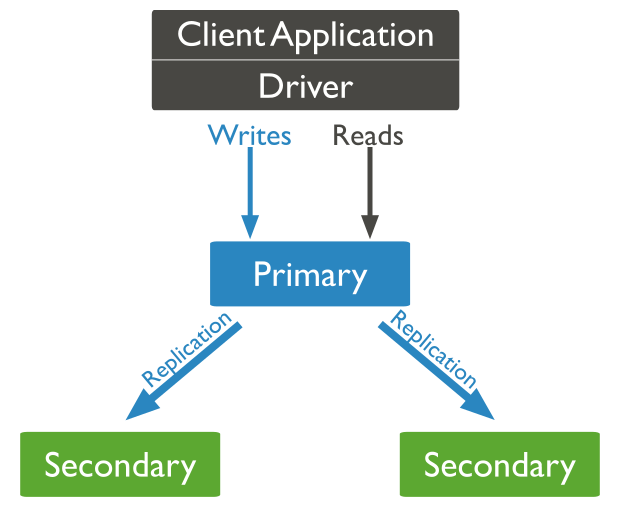
一个典型的MongoDB复制集包含:
- 一个主节点(Primary):处理所有写操作
- 多个从节点(Secondary):复制主节点数据,可处理读操作
- 可选的仲裁节点(Arbiter):参与选举但不存储数据
3.1.2 复制集配置
基础配置示例:
- 准备配置文件(mongod.conf):
1replication:2 replSetName: "rs0"3net:4 bindIp: localhost5 port: 270176storage:7 dbPath: "/var/lib/mongodb"- 启动多个MongoDB实例:
1mongod --config mongod.conf --port 270172mongod --config mongod.conf --port 27018 --dbpath /var/lib/mongodb-23mongod --config mongod.conf --port 27019 --dbpath /var/lib/mongodb-3- 初始化复制集:
1// 连接到其中一个实例2mongo --port 2701734// 初始化复制集5rs.initiate({6 _id: "rs0",7 members: [8 { _id: 0, host: "localhost:27017" },9 { _id: 1, host: "localhost:27018" },10 { _id: 2, host: "localhost:27019" }11 ]12})- 复制集状态检查:
1rs.status() // 查看复制集状态2rs.isMaster() // 检查是否为主节点3.1.3 复制集读写分离
可以通过读偏好设置实现读写分离:
1// 默认从主节点读取2db.collection.find().readPref("primary")34// 从次要节点读取5db.collection.find().readPref("secondary")67// 就近原则8db.collection.find().readPref("nearest")在驱动程序中配置读偏好:
1// MongoDB Node.js驱动示例2const client = new MongoClient(uri, {3 readPreference: 'secondary',4 readPreferenceTags: [5 { datacenter: 'east' },6 { datacenter: 'west' }7 ]8});3.2 分片集群
当数据量和处理需求超出单台服务器能力时,分片集群允许MongoDB水平扩展以支持大型应用。
3.2.1 分片集群架构
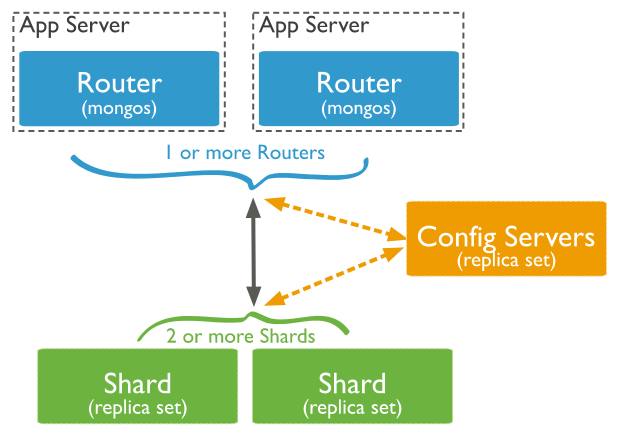
MongoDB分片集群由以下组件组成:
- 分片(Shard):每个分片是一个独立的复制集
- 配置服务器(Config Server):存储集群元数据的复制集
- 路由服务(mongos):将客户端请求路由到相应分片
3.2.2 分片策略
MongoDB支持两种主要分片策略:
范围分片:基于片键值的连续范围划分数据
1sh.shardCollection("mydatabase.orders", { order_date: 1 })哈希分片:基于片键值的哈希结果均匀分布数据
1sh.shardCollection("mydatabase.users", { user_id: "hashed" })3.2.3 分片键选择
选择良好的分片键对性能至关重要:
- 高基数:取值范围广,如UUID或时间戳
- 分布均匀:避免数据倾斜
- 非单调增长:避免写入热点
- 常用于查询:减少跨分片查询
1// 复合分片键示例2sh.shardCollection("mydatabase.products", { category: 1, product_id: 1 })3.2.4 区域分片
区域分片允许按地理位置或其他条件将数据分布到特定分片:
1// 定义区域2sh.addShardToZone("shard0", "us-east")3sh.addShardToZone("shard1", "us-west")4sh.addShardToZone("shard2", "europe")56// 为区域设置范围7sh.updateZoneKeyRange(8 "mydatabase.users",9 { country: "US", state: "NY" },10 { country: "US", state: "PA" },11 "us-east"12)3.3 高级查询功能
MongoDB提供多种高级查询功能,用于复杂的数据处理和分析。
3.3.1 Change Streams
Change Streams允许应用程序监听数据库变更:
1const changeStream = db.collection('inventory').watch();23changeStream.on('change', (change) => {4 console.log('Detected change:', change);5 // 根据变更类型进行处理6 if (change.operationType === 'insert') {7 // 处理新插入的文档8 } else if (change.operationType === 'update') {9 // 处理更新操作10 }11});Change Streams可用于实现:
- 缓存失效
- 实时分析
- 事件驱动架构
- 跨系统数据同步
3.3.2 地理空间查询
MongoDB提供强大的地理空间索引和查询功能:
1// 创建2dsphere索引2db.places.createIndex({ location: "2dsphere" })34// 附近查询5db.places.find({6 location: {7 $near: {8 $geometry: {9 type: "Point",10 coordinates: [121.4737, 31.2304] // 上海坐标11 },12 $maxDistance: 5000 // 5公里内13 }14 }15})1617// 地理边界框查询18db.places.find({19 location: {20 $geoWithin: {21 $geometry: {22 type: "Polygon",23 coordinates: [[24 [120.0, 30.0], [122.0, 30.0],25 [122.0, 32.0], [120.0, 32.0],26 [120.0, 30.0]27 ]]28 }29 }30 }31})3.3.3 全文搜索
MongoDB的文本搜索功能支持多语言全文检索:
1// 创建文本索引2db.articles.createIndex({ title: "text", content: "text" })34// 基本全文搜索5db.articles.find({ $text: { $search: "mongodb nosql 数据库" } })67// 使用权重和评分8db.articles.find(9 { $text: { $search: "mongodb nosql 数据库" } },10 { score: { $meta: "textScore" } }11).sort({ score: { $meta: "textScore" } })配置文本索引权重:
1// 标题权重高于内容2db.articles.createIndex(3 { title: "text", content: "text" },4 { weights: { title: 10, content: 5 } }5)3.3.4 图表查询
MongoDB 4.0+引入了$graphLookup,支持图表数据的递归查询:
1// 查询员工的所有上级管理层2db.employees.aggregate([3 { $match: { name: "张三" } },4 {5 $graphLookup: {6 from: "employees",7 startWith: "$manager_id",8 connectFromField: "manager_id",9 connectToField: "_id",10 as: "management_chain",11 maxDepth: 5,12 depthField: "level"13 }14 }15])3.4 安全性与审计
MongoDB提供全面的安全控制机制,保护数据免受未授权访问。
3.4.1 认证与授权
启用认证:
1# mongod.conf2security:3 authorization: enabled创建管理员用户:
1use admin2db.createUser({3 user: "adminUser",4 pwd: "securePassword",5 roles: [{ role: "userAdminAnyDatabase", db: "admin" }]6})创建应用用户:
1use mydb2db.createUser({3 user: "appUser",4 pwd: "appPassword",5 roles: [6 { role: "readWrite", db: "mydb" },7 { role: "read", db: "reporting" }8 ]9})内置角色:
- 数据库用户:
read,readWrite - 数据库管理:
dbAdmin,dbOwner - 集群管理:
clusterAdmin,clusterManager - 备份恢复:
backup,restore - 超级用户:
root
自定义角色:
1db.createRole({2 role: "reportingRole",3 privileges: [4 {5 resource: { db: "reporting", collection: "" },6 actions: ["find"]7 }8 ],9 roles: []10})3.4.2 TLS/SSL加密
配置MongoDB使用TLS/SSL加密连接:
1# mongod.conf2net:3 ssl:4 mode: requireSSL5 PEMKeyFile: /path/to/mongodb.pem6 CAFile: /path/to/ca.pem3.4.3 字段级加密
MongoDB 4.2+支持客户端字段级加密:
1// 创建加密集合2db.createCollection("patients", {3 validator: {4 $jsonSchema: {5 bsonType: "object",6 properties: {7 name: {8 encrypt: {9 bsonType: "string",10 algorithm: "AEAD_AES_256_CBC_HMAC_SHA_512-Deterministic"11 }12 },13 ssn: {14 encrypt: {15 bsonType: "string",16 algorithm: "AEAD_AES_256_CBC_HMAC_SHA_512-Deterministic"17 }18 },19 bloodType: {20 encrypt: {21 bsonType: "string",22 algorithm: "AEAD_AES_256_CBC_HMAC_SHA_512-Random"23 }24 },25 medicalRecords: {26 encrypt: {27 bsonType: "object",28 algorithm: "AEAD_AES_256_CBC_HMAC_SHA_512-Random"29 }30 }31 }32 }33 }34})3.4.4 审计
MongoDB Enterprise版支持审计功能:
1# mongod.conf2auditLog:3 destination: file4 format: JSON5 path: /var/log/mongodb/audit.json6 filter: '{ atype: { $in: ["authenticate", "createUser", "dropUser"] } }'3.5 性能优化与监控
高效运维MongoDB需要持续监控和优化系统性能。
3.5.1 查询优化
使用explain()分析查询执行计划:
1// 基本执行计划2db.users.find({ age: { $gt: 30 } }).explain()34// 详细执行信息5db.users.find({ age: { $gt: 30 } }).explain("executionStats")67// 所有执行计划8db.users.find({ age: { $gt: 30 } }).explain("allPlansExecution")查询优化技巧:
- 使用
hint()强制使用特定索引 - 适当投影仅返回必要字段
- 使用适当的索引覆盖查询
- 避免正则表达式前缀通配符
3.5.2 索引优化
优化索引策略:
- 创建支持查询的索引
- 避免创建冗余索引
- 定期检查索引使用情况
- 在后台创建大型索引
1// 查看索引使用统计2db.users.aggregate([{ $indexStats: {} }])34// 查找未使用的索引5db.adminCommand({ serverStatus: 1 }).metrics.commands67// 在后台创建索引8db.users.createIndex({ email: 1 }, { background: true })3.5.3 MongoDB Compass
MongoDB Compass是官方GUI工具,提供:
- 数据可视化
- 性能分析
- 索引建议
- 聚合管道构建
- 模式可视化
3.5.4 MongoDB Atlas监控
MongoDB Atlas云服务提供:
- 实时性能监控
- 自动化警报
- 查询性能分析
- 容量规划
- 实时日志查看
4. Spring Boot与MongoDB集成最佳实践
Spring Boot提供了丰富的工具和抽象,使MongoDB集成变得简单而强大。
4.1 配置MongoDB连接
4.1.1 添加依赖
在pom.xml中添加必要依赖:
1<!-- Spring Data MongoDB -->2<dependency>3 <groupId>org.springframework.boot</groupId>4 <artifactId>spring-boot-starter-data-mongodb</artifactId>5</dependency>67<!-- 可选:Lombok简化代码 -->8<dependency>9 <groupId>org.projectlombok</groupId>10 <artifactId>lombok</artifactId>11 <optional>true</optional>12</dependency>4.1.2 配置连接
在application.yml中配置MongoDB连接:
单机连接:
1spring:2 data:3 mongodb:4 uri: mongodb://username:password@localhost:27017/database复制集连接:
1spring:2 data:3 mongodb:4 uri: mongodb://user:password@server1:27017,server2:27017,server3:27017/database?replicaSet=rs0&authSource=admin高级配置:
1spring:2 data:3 mongodb:4 uri: mongodb://user:password@localhost:27017/database5 auto-index-creation: true6 field-naming-strategy: org.springframework.data.mapping.model.SnakeCaseFieldNamingStrategy7 grid-fs-database: files8 authentication-database: admin9 uuid-representation: standard10 connection-pool:11 max-connection-life-time: 3000012 max-idle-time: 6000013 max-size: 10014 min-size: 104.2 定义文档映射
4.2.1 基本文档映射
使用@Document注解将Java类映射到MongoDB集合:
1import org.springframework.data.mongodb.core.mapping.Document;2import org.springframework.data.annotation.Id;3import lombok.Data;4import java.time.LocalDateTime;5import java.util.List;67@Data8@Document(collection = "products")9public class Product {10 @Id11 private String id;12 13 private String name;14 private String description;15 private double price;16 private int stock;17 18 private List<String> categories;19 20 @Field("tech_specs")21 private Map<String, String> technicalSpecifications;22 23 private LocalDateTime createdAt;24 private LocalDateTime updatedAt;25}4.2.2 索引配置
使用@Indexed注解定义索引:
1@Document(collection = "users")2public class User {3 @Id4 private String id;5 6 @Indexed(unique = true)7 private String email;8 9 @Indexed10 private String lastName;11 12 @TextIndexed13 private String bio;14 15 @Indexed(direction = IndexDirection.DESCENDING)16 private LocalDateTime createdAt;17 18 @CompoundIndex(name = "location_idx", def = "{'address.city': 1, 'address.country': 1}")19 private Address address;20}4.2.3 嵌入式文档
表示嵌入式文档结构:
1@Data2public class Address {3 private String street;4 private String city;5 private String state;6 private String zipCode;7 private String country;8 9 @GeoSpatialIndexed(type = GeoSpatialIndexType.GEO_2DSPHERE)10 private GeoJsonPoint location;11}4.2.4 DBRef引用
使用@DBRef表示文档引用:
1@Document(collection = "orders")2public class Order {3 @Id4 private String id;5 6 @DBRef7 private User customer;8 9 private List<OrderItem> items;10 11 private double totalAmount;12 private String status;13 private LocalDateTime orderDate;14}1516@Data17public class OrderItem {18 @DBRef(lazy = true)19 private Product product;20 21 private int quantity;22 private double price;23}4.3 使用Spring Data MongoDB Repository
4.3.1 基本Repository接口
创建继承MongoRepository的接口:
1import org.springframework.data.mongodb.repository.MongoRepository;23public interface ProductRepository extends MongoRepository<Product, String> {4 // 自动实现常用CRUD操作5}4.3.2 自定义查询方法
基于方法名定义查询:
1public interface ProductRepository extends MongoRepository<Product, String> {2 // 查找特定价格范围内的产品3 List<Product> findByPriceBetween(double minPrice, double maxPrice);4 5 // 查找特定类别的产品,并按价格排序6 List<Product> findByCategoriesContainingOrderByPriceAsc(String category);7 8 // 使用正则表达式查找名称匹配的产品9 List<Product> findByNameRegex(String nameRegex);10 11 // 统计库存低于指定值的产品数量12 long countByStockLessThan(int threshold);13 14 // 查找某个日期之后创建的产品15 List<Product> findByCreatedAtAfter(LocalDateTime date);16}4.3.3 使用@Query注解
使用MongoDB原生查询语法:
1public interface UserRepository extends MongoRepository<User, String> {2 // 使用JSON查询3 @Query("{ 'age': { $gte: ?0, $lte: ?1 } }")4 List<User> findUsersInAgeRange(int minAge, int maxAge);5 6 // 字段投影7 @Query(value = "{ 'status': ?0 }", fields = "{ 'name': 1, 'email': 1 }")8 List<User> findActiveUsersWithProjection(String status);9 10 // 更新查询11 @Query("{ 'email': ?0 }")12 @Update("{ '$set': { 'status': ?1, 'lastLoginDate': ?2 } }")13 void updateUserStatus(String email, String status, LocalDateTime lastLogin);14 15 // 聚合管道16 @Aggregation("{ $match: { 'department': ?0 } }, "17 + "{ $group: { '_id': '$jobTitle', 'avgSalary': { $avg: '$salary' } } }, "18 + "{ $sort: { 'avgSalary': -1 } }")19 List<Document> getAverageSalaryByJobTitle(String department);20}4.3.4 分页与排序
实现分页查询:
1@GetMapping("/products")2public Page<Product> getProducts(3 @RequestParam(defaultValue = "0") int page,4 @RequestParam(defaultValue = "10") int size,5 @RequestParam(defaultValue = "name") String sortBy6) {7 Pageable pageable = PageRequest.of(page, size, Sort.by(sortBy));8 return productRepository.findAll(pageable);9}1011// 自定义分页方法12Page<Product> findByCategoryAndPriceGreaterThan(13 String category, double price, Pageable pageable);4.4 使用MongoTemplate进行高级操作
对于更复杂的操作,MongoTemplate提供了直接访问MongoDB的能力:
1@Service2public class ProductService {3 private final MongoTemplate mongoTemplate;4 5 public ProductService(MongoTemplate mongoTemplate) {6 this.mongoTemplate = mongoTemplate;7 }8 9 // 使用criteria构建动态查询10 public List<Product> findProductsByDynamicCriteria(String name, 11 List<String> categories, 12 Double minPrice, 13 Double maxPrice) {14 Criteria criteria = new Criteria();15 16 List<Criteria> filters = new ArrayList<>();17 18 if (name != null) {19 filters.add(Criteria.where("name").regex(name, "i"));20 }21 22 if (categories != null && !categories.isEmpty()) {23 filters.add(Criteria.where("categories").in(categories));24 }25 26 if (minPrice != null && maxPrice != null) {27 filters.add(Criteria.where("price").gte(minPrice).lte(maxPrice));28 } else if (minPrice != null) {29 filters.add(Criteria.where("price").gte(minPrice));30 } else if (maxPrice != null) {31 filters.add(Criteria.where("price").lte(maxPrice));32 }33 34 if (!filters.isEmpty()) {35 criteria = new Criteria().andOperator(36 filters.toArray(new Criteria[0]));37 }38 39 Query query = new Query(criteria);40 return mongoTemplate.find(query, Product.class);41 }42 43 // 使用更新操作符44 public long updateProductPrices(String category, double percentage) {45 Query query = new Query(Criteria.where("categories").is(category));46 Update update = new Update().multiply("price", 1 + (percentage / 100));47 UpdateResult result = mongoTemplate.updateMulti(query, update, Product.class);48 return result.getModifiedCount();49 }50 51 // 执行聚合操作52 public List<CategoryStat> getProductStatsByCategory() {53 TypedAggregation<Product> aggregation = Aggregation.newAggregation(54 Product.class,55 Aggregation.unwind("categories"),56 Aggregation.group("categories")57 .count().as("count")58 .avg("price").as("averagePrice")59 .max("price").as("maxPrice"),60 Aggregation.sort(Sort.Direction.DESC, "count")61 );62 63 AggregationResults<CategoryStat> results = 64 mongoTemplate.aggregate(aggregation, CategoryStat.class);65 66 return results.getMappedResults();67 }68 69 // 地理空间查询70 public List<Store> findNearbyStores(double latitude, double longitude, double maxDistance) {71 Point location = new Point(longitude, latitude);72 Query query = new Query(73 Criteria.where("location").nearSphere(location)74 .maxDistance(maxDistance / 6378.1) // 转换为弧度75 );76 return mongoTemplate.find(query, Store.class);77 }78 79 // 批量操作80 public void bulkUpsertProducts(List<Product> products) {81 BulkOperations bulkOps = mongoTemplate.bulkOps(82 BulkOperations.BulkMode.UNORDERED, Product.class);83 84 for (Product product : products) {85 Query query = new Query(Criteria.where("sku").is(product.getSku()));86 Update update = getProductUpdateDefinition(product);87 bulkOps.upsert(query, update);88 }89 90 BulkWriteResult result = bulkOps.execute();91 System.out.println("Inserted: " + result.getInsertedCount());92 System.out.println("Modified: " + result.getModifiedCount());93 }94 95 private Update getProductUpdateDefinition(Product product) {96 Update update = new Update();97 // 设置所有产品字段...98 update.set("name", product.getName());99 update.set("price", product.getPrice());100 // ...其他字段101 update.set("updatedAt", LocalDateTime.now());102 return update;103 }104}4.5 事务管理
MongoDB 4.0+支持多文档事务,Spring Data MongoDB提供了事务支持:
4.5.1 配置事务管理器
1@Configuration2public class MongoConfig extends AbstractMongoClientConfiguration {3 4 @Override5 protected String getDatabaseName() {6 return "mydatabase";7 }8 9 @Bean10 MongoTransactionManager transactionManager(MongoDatabaseFactory dbFactory) {11 return new MongoTransactionManager(dbFactory);12 }13}4.5.2 使用声明式事务
1@Service2public class OrderService {3 4 private final OrderRepository orderRepository;5 private final ProductRepository productRepository;6 private final CustomerRepository customerRepository;7 8 // 构造函数注入...9 10 @Transactional11 public Order createOrder(OrderRequest request) {12 // 检查客户是否存在13 Customer customer = customerRepository.findById(request.getCustomerId())14 .orElseThrow(() -> new EntityNotFoundException("Customer not found"));15 16 // 检查并更新产品库存17 List<OrderItem> items = new ArrayList<>();18 for (OrderItemRequest itemReq : request.getItems()) {19 Product product = productRepository.findById(itemReq.getProductId())20 .orElseThrow(() -> new EntityNotFoundException("Product not found"));21 22 if (product.getStock() < itemReq.getQuantity()) {23 throw new InsufficientStockException("Not enough stock for product: " + product.getName());24 }25 26 // 减少库存27 product.setStock(product.getStock() - itemReq.getQuantity());28 productRepository.save(product);29 30 // 创建订单项31 OrderItem item = new OrderItem();32 item.setProduct(product);33 item.setQuantity(itemReq.getQuantity());34 item.setPrice(product.getPrice());35 items.add(item);36 }37 38 // 创建订单39 Order order = new Order();40 order.setCustomer(customer);41 order.setItems(items);42 order.setStatus("CREATED");43 order.setOrderDate(LocalDateTime.now());44 order.setTotalAmount(calculateTotalAmount(items));45 46 return orderRepository.save(order);47 }48 49 private double calculateTotalAmount(List<OrderItem> items) {50 return items.stream()51 .mapToDouble(item -> item.getPrice() * item.getQuantity())52 .sum();53 }54}4.5.3 编程式事务
1@Service2public class InventoryService {3 4 private final MongoTemplate mongoTemplate;5 private final TransactionTemplate transactionTemplate;6 7 public InventoryService(MongoTemplate mongoTemplate, 8 PlatformTransactionManager transactionManager) {9 this.mongoTemplate = mongoTemplate;10 this.transactionTemplate = new TransactionTemplate(transactionManager);11 }12 13 public boolean transferStock(String fromProductId, String toProductId, int quantity) {14 return transactionTemplate.execute(status -> {15 try {16 // 从源产品减少库存17 Query fromQuery = new Query(Criteria.where("_id").is(fromProductId)18 .and("stock").gte(quantity));19 Update fromUpdate = new Update().inc("stock", -quantity);20 UpdateResult fromResult = mongoTemplate.updateFirst(21 fromQuery, fromUpdate, Product.class);22 23 if (fromResult.getModifiedCount() == 0) {24 status.setRollbackOnly();25 return false;26 }27 28 // 向目标产品增加库存29 Query toQuery = new Query(Criteria.where("_id").is(toProductId));30 Update toUpdate = new Update().inc("stock", quantity);31 mongoTemplate.updateFirst(toQuery, toUpdate, Product.class);32 33 return true;34 } catch (Exception e) {35 status.setRollbackOnly();36 throw e;37 }38 });39 }40}5. MongoDB性能优化
MongoDB性能优化是一个多层次的工程,涉及从硬件配置到应用设计的各个环节。本节将全面介绍MongoDB性能优化的关键策略和最佳实践。
5.1 硬件与系统优化
MongoDB性能在很大程度上受到底层硬件和操作系统的影响。
5.1.1 硬件选择
- 存储类型:使用SSD/NVMe替代HDD,尤其是对于频繁写入和随机读取场景
- 内存容量:MongoDB利用内存映射文件机制,理想情况下工作集应完全适合RAM
- CPU:多核CPU有利于并发操作和聚合框架的并行执行
- 网络:使用至少千兆网络,对分片集群尤为重要
5.1.2 操作系统配置
Linux系统优化:
1# 文件描述符限制(对连接数量很重要)2sudo sysctl -w fs.file-max=1000003sudo sysctl -w fs.nr_open=10000045# 禁用透明大页面(极其重要)6echo never > /sys/kernel/mm/transparent_hugepage/enabled7echo never > /sys/kernel/mm/transparent_hugepage/defrag89# readahead设置(适用于SSD)10sudo blockdev --setra 32 /dev/sda1112# 增加vm.swappiness(减少swap使用)13sudo sysctl -w vm.swappiness=1将这些设置添加到/etc/sysctl.conf中使其永久生效。
5.2 MongoDB实例优化
5.2.1 关键配置参数
WiredTiger存储引擎优化:
1storage:2 wiredTiger:3 engineConfig:4 cacheSizeGB: 4 # 默认是物理内存的一半5 journalCompressor: snappy # 日志压缩算法6 collectionConfig:7 blockCompressor: snappy # 数据压缩算法8 indexConfig:9 prefixCompression: true # 索引前缀压缩连接与网络设置:
1net:2 maxIncomingConnections: 2000 # 最大连接数3 port: 270174 bindIp: localhost,192.168.1.100 # 绑定多个IP操作限制:
1operationProfiling:2 mode: slowOp # 慢查询记录模式3 slowOpThresholdMs: 100 # 慢查询阈值(毫秒)5.2.2 分析与调优工具
- mongostat:监控实例整体性能
- mongotop:识别集合级别的读写活动
- MongoDB Compass:可视化分析工具
- Database Profiler:详细分析慢查询
1// 启用数据库分析器2db.setProfilingLevel(1, { slowms: 100 })34// 查询慢操作5db.system.profile.find({ millis: { $gt: 100 } }).sort({ ts: -1 })5.3 数据模型与索引优化
MongoDB的性能很大程度上取决于数据模型设计和索引策略。
5.3.1 数据模型优化
文档结构优化:
- 按访问模式设计:常一起访问的数据应放在一起
- 避免过大文档:接近16MB限制的文档会影响性能
- 避免不断增长的数组:大型数组可能导致文档大小不断增长
- 控制嵌套深度:深度嵌套文档增加查询复杂度
1// 有效的嵌入式文档设计2{3 "_id": ObjectId("..."),4 "order_id": "ORD123456",5 "customer": { // 嵌入常用信息6 "id": "CUST789",7 "name": "李四",8 "contact": "+86123456789"9 },10 "items": [ // 控制数组大小11 {12 "product_id": "PROD001",13 "name": "商品A",14 "quantity": 2,15 "price": 29916 },17 // 通常不超过100个元素18 ]19}5.3.2 高效索引策略
索引优化原则:
- 覆盖查询索引:使用包含所有查询字段的索引
- 高选择性前缀:在复合索引中,将高选择性字段放在前面
- 适当的索引基数:避免在低基数字段上创建单字段索引
- 索引交集:利用MongoDB的索引交集功能
- 避免过多索引:每个索引都增加写入开销
1// 创建支持多种查询的复合索引2db.orders.createIndex({ customer_id: 1, order_date: -1, status: 1 })34// 高效处理排序的索引5db.products.createIndex({ category: 1, price: -1 })67// 使用hint强制使用特定索引(测试性能时使用)8db.orders.find({ customer_id: "C1001", status: "PENDING" })9 .hint({ customer_id: 1, order_date: -1, status: 1 })5.3.3 定期索引维护
1// 检查索引使用情况2db.collection.aggregate([{ $indexStats: {} }])34// 查找未使用的索引5db.collection.aggregate([6 { $indexStats: {} },7 { $match: { accesses: { $elemMatch: { count: 0 } } } }8])910// 删除未使用的索引11db.collection.dropIndex("unused_index_name")5.4 查询优化技术
5.4.1 查询分析与优化
使用explain()是优化查询的关键工具:
1// 分析查询计划2db.orders.find({ status: "COMPLETED", order_date: { $gt: ISODate("2023-01-01") } })3 .sort({ total_amount: -1 })4 .explain("executionStats")关注以下执行计划信息:
- COLLSCAN vs. IXSCAN:全表扫描vs索引扫描
- indexBounds:索引使用范围
- nReturned vs. totalKeysExamined:返回文档数vs检查的索引键数
- executionTimeMillis:执行时间
5.4.2 投影优化
仅查询需要的字段可以显著提高性能:
1// 不好的做法:返回所有字段2db.products.find({ category: "electronics" })34// 好的做法:只返回需要的字段5db.products.find(6 { category: "electronics" }, 7 { name: 1, price: 1, stock: 1, _id: 0 }8)5.4.3 批量操作优化
1// 单条插入(效率低)2for (let i = 0; i < 10000; i++) {3 db.items.insertOne({ value: i });4}56// 批量插入(效率高)7const items = [];8for (let i = 0; i < 10000; i++) {9 items.push({ value: i });10}11db.items.insertMany(items, { ordered: false });5.4.4 读取分离与查询路由
使用读偏好设置可以优化读取性能:
1// 在Node.js驱动中配置2const client = new MongoClient(uri, {3 readPreference: 'secondaryPreferred',4 // 其他选项...5});67// 针对具体操作设置8db.collection('orders').find().readPref('secondary');5.5 高级性能优化策略
5.5.1 数据分片策略
有效的分片策略对大规模部署至关重要:
1// 选择正确的分片键2// 1. 对于写入密集型工作负载:3sh.shardCollection("database.logs", { timestamp: 1 }) // 时间戳分片45// 2. 对于读取密集型工作负载:6sh.shardCollection("database.users", { country: 1, user_id: 1 }) // 复合分片键78// 3. 均匀分布的哈希分片9sh.shardCollection("database.messages", { _id: "hashed" }) // 避免热点5.5.2 数据压缩与归档
处理历史数据的策略:
1// 时间序列数据归档示例2// 1. 创建按月归档集合3db.createCollection("logs_archive_202301")45// 2. 复制一月数据到归档集合6db.logs.aggregate([7 { $match: { timestamp: { $gte: ISODate("2023-01-01"), $lt: ISODate("2023-02-01") } } },8 { $out: "logs_archive_202301" }9])1011// 3. 删除原集合中的归档数据12db.logs.deleteMany({ timestamp: { $gte: ISODate("2023-01-01"), $lt: ISODate("2023-02-01") } })5.5.3 缓存策略
1// 创建TTL索引用于缓存集合2db.cache.createIndex({ "createdAt": 1 }, { expireAfterSeconds: 3600 }) // 一小时后过期34// 物化视图实现5db.createView("active_users_view", "users", [6 { $match: { status: "active" } },7 { $project: { name: 1, email: 1, last_login: 1 } }8])5.5.4 Change Streams与实时监控
1// 监控集合变化进行缓存失效2const changeStream = db.products.watch();3changeStream.on('change', (change) => {4 if (change.operationType === 'update' || change.operationType === 'replace') {5 // 清除缓存6 cache.del(`product:${change.documentKey._id}`);7 }8});5.6 性能测试与基准
以下是一些常见操作的性能基准比较:
| 操作类型 | 优化前(ms) | 优化后(ms) | 改进 |
|---|---|---|---|
| 大型集合点查询 | 120 | 5 | 创建了精确索引 |
| 分页查询(跳过1000条) | 350 | 30 | 使用游标分页代替skip |
| 复杂聚合操作 | 1200 | 300 | 创建物化视图预计算 |
| 批量插入(10000条) | 5000 | 800 | 使用批处理和unordered插入 |
5.7 监控与预警
有效的监控是性能优化的重要组成部分:
-
关键指标监控:
- 操作延迟
- 连接数
- 锁等待
- 内存使用
- 查询率
-
监控工具:
- MongoDB Atlas监控
- Prometheus + Grafana
- mongostat和mongotop
- 日志分析
-
预警机制:
- 响应时间超阈值警报
- 连接数接近最大值警报
- 磁盘空间不足警报
- 复制集延迟警报
6. 最佳实践与设计模式
6.1 MongoDB架构设计最佳实践
6.1.1 高可用性设计
复制集最佳实践:
- 使用至少3个节点的复制集(2个数据节点+1个仲裁节点)
- 在不同服务器/机架/数据中心部署节点
- 配置适当的写入关注级别(w: "majority")
- 实施适当的心跳超时设置
1// 创建复制集示例配置2rs.initiate({3 _id: "rs0",4 members: [5 { _id: 0, host: "server1:27017", priority: 2 }, // 优先成为主节点6 { _id: 1, host: "server2:27017", priority: 1 },7 { _id: 2, host: "server3:27017", priority: 1 }8 ],9 settings: {10 heartbeatTimeoutSecs: 10,11 electionTimeoutMillis: 1000012 }13})分片集群最佳实践:
- 每个分片使用独立复制集
- 配置服务器使用独立复制集
- 部署多个mongos实例作为路由服务
- 选择合适的分片键
- 定期均衡数据分布
6.1.2 备份与恢复策略
备份选项:
- mongodump/mongorestore:
1# 全量备份2mongodump --uri="mongodb://user:password@localhost:27017/mydatabase" --out=/backup/mongodb/$(date +"%Y-%m-%d")34# 恢复5mongorestore --uri="mongodb://user:password@localhost:27017/" --dir=/backup/mongodb/2023-05-15-
文件系统快照:
- 配置存储系统支持一致性快照
- 使用文件系统或云服务提供的快照功能
-
oplog备份:
1# 备份oplog用于时间点恢复2mongodump --uri="mongodb://user:password@localhost:27017/local" --collection=oplog.rs --out=/backup/oplog/$(date +"%Y-%m-%d")恢复计划:
- 制定明确的RTO(恢复时间目标)和RPO(恢复点目标)
- 定期测试备份有效性
- 记录恢复步骤并进行演练
6.1.3 安全最佳实践
安全基础:
- 启用身份验证和授权
- 使用强密码和最小权限原则
- 启用TLS/SSL加密
- 实施网络隔离和防火墙保护
高级安全措施:
- 实施LDAP或Kerberos集成
- 配置字段级加密保护敏感数据
- 启用审计功能记录关键操作
- 定期安全扫描和更新
1// 创建只读用户示例2use reporting3db.createUser({4 user: "reporting_user",5 pwd: "strong_password_here",6 roles: [7 { role: "read", db: "reporting" },8 { role: "readAnyDatabase", db: "admin" }9 ],10 authenticationRestrictions: [11 { clientSource: ["192.168.1.0/24"] } // IP限制12 ]13})6.2 常见应用场景模式
6.2.1 物联网数据管理
IoT应用通常产生大量时序数据:
1// 使用时间序列集合(MongoDB 5.0+)2db.createCollection("device_readings", {3 timeseries: {4 timeField: "timestamp",5 metaField: "device_id",6 granularity: "minutes"7 }8})910// 插入传感器数据11db.device_readings.insertOne({12 timestamp: ISODate("2023-06-01T10:15:30Z"),13 device_id: "thermostat-1",14 temperature: 22.5,15 humidity: 45,16 battery: 8717})IoT数据管理最佳实践:
- 使用分片按设备ID或时间范围分布数据
- 实施TTL索引或归档策略管理数据生命周期
- 使用预聚合降低实时分析成本
- 考虑压缩存储减少空间占用
6.2.2 实时分析系统
使用MongoDB进行实时分析:
1// 使用Change Streams跟踪实时变化2const pipeline = [3 { $match: { "operationType": { $in: ["insert", "update", "replace"] } } },4 { $match: { "fullDocument.important_flag": true } }5];67const changeStream = db.collection('events').watch(pipeline);8changeStream.on('change', (change) => {9 // 处理重要事件,更新仪表板等10 updateDashboard(change.fullDocument);11});实时分析最佳实践:
- 创建针对分析查询的专用视图和索引
- 使用物化视图预计算常用聚合
- 利用读取偏好从次要节点读取降低主节点负担
- 结合内存数据库或流处理系统处理极端实时需求
6.2.3 内容管理系统
MongoDB适合存储和管理各种内容:
1// 内容文档示例2db.articles.insertOne({3 title: "MongoDB最佳实践",4 slug: "mongodb-best-practices",5 content: "正文内容...",6 author: ObjectId("author_id"),7 status: "published",8 categories: ["database", "nosql", "performance"],9 tags: ["mongodb", "optimization", "schema-design"],10 created_at: ISODate("2023-06-01T09:00:00Z"),11 updated_at: ISODate("2023-06-05T14:30:00Z"),12 comments: [13 {14 user: ObjectId("user_id"),15 text: "非常有帮助的文章!",16 created_at: ISODate("2023-06-02T10:15:00Z")17 }18 ],19 metadata: {20 views: 1250,21 likes: 42,22 reading_time: 8 // 分钟23 }24})2526// 创建全文索引支持搜索27db.articles.createIndex(28 { title: "text", content: "text", tags: "text" },29 { weights: { title: 10, content: 5, tags: 3 } }30)CMS最佳实践:
- 使用GridFS存储大型文件和媒体
- 实施版本控制模式跟踪内容修改
- 创建复合索引支持常见过滤和排序
- 使用投影限制返回特定字段提高性能
6.2.4 移动应用后端
为移动应用设计MongoDB后端:
1// 用户模式示例2const userSchema = {3 username: String,4 email: String,5 profile: {6 name: String,7 avatar: String,8 preferences: Object9 },10 devices: [11 {12 device_id: String,13 platform: String, // "ios", "android"14 push_token: String,15 last_login: Date16 }17 ],18 status: String,19 created_at: Date20};2122// 数据同步设计23db.user_data.updateOne(24 { user_id: "user123", last_sync: { $lt: ISODate("2023-06-01T10:00:00Z") } },25 { 26 $set: { 27 "sync_status": "pending",28 "last_sync_attempt": new Date()29 } 30 }31);移动应用最佳实践:
- 实施有效的同步机制处理离线操作
- 使用TTL索引管理临时数据(如会话)
- 创建针对地理位置的索引支持基于位置的功能
- 优化查询减少网络流量和电池消耗
6.3 常见问题与解决方案
6.3.1 数据一致性挑战
问题:MongoDB的分布式特性带来一致性挑战。
解决方案:
- 使用适当的写入关注和读取偏好
- 实施乐观并发控制
- 使用多文档事务处理关键操作
- 考虑在应用层实现补偿机制
1// 高一致性操作配置2db.accounts.updateOne(3 { _id: accountId, balance: { $gte: amount } },4 { $inc: { balance: -amount } },5 { writeConcern: { w: "majority", j: true } }6);6.3.2 性能下降排查
问题:随着数据增长,查询性能可能下降。
排查步骤:
- 使用
explain()分析慢查询 - 检查索引使用情况和覆盖范围
- 评估工作集大小与可用内存
- 分析系统资源使用情况
- 检查网络延迟和连接问题
解决方案:
- 创建或调整索引
- 优化查询模式
- 增加系统资源
- 考虑分片或归档数据
6.3.3 扩展性问题
问题:应用增长导致数据库压力增加。
解决方案:
- 垂直扩展:增加单机资源(内存、CPU、存储)
- 水平扩展:实施分片集群
- 功能分解:将不同数据集分散到不同实例
- 读写分离:配置读取偏好从次要节点读取
1// 实施读写分离2// 写操作使用默认配置3db.orders.insertOne({ ... });45// 读操作使用secondaryPreferred6db.orders.find({ status: "pending" }).readPref("secondaryPreferred");6.3.4 迁移与版本升级
问题:数据库迁移和版本升级存在风险。
最佳实践:
- 制定详细的迁移计划和回滚策略
- 在测试环境完整验证升级流程
- 使用滚动升级减少停机时间
- 监控整个过程的系统健康状态
- 保留足够的备份以防意外
1# 滚动升级复制集示例(每次一个节点)2# 1. 升级次要节点3ssh secondary14sudo systemctl stop mongod5sudo apt update && sudo apt install -y mongodb-org6sudo systemctl start mongod78# 2. 等待同步完成后继续其他节点...6.4 MongoDB与其他技术的集成
6.4.1 MongoDB与消息队列集成
将MongoDB与Kafka或RabbitMQ集成可以创建强大的数据管道:
1// Kafka Consumer将消息写入MongoDB2kafkaConsumer.on('message', async (message) => {3 try {4 const data = JSON.parse(message.value);5 // 数据验证和转换6 const result = await db.collection('incoming_data').insertOne({7 ...data,8 kafka_offset: message.offset,9 processed_at: new Date()10 });11 // 提交偏移量12 kafkaConsumer.commitMessage(message);13 } catch (error) {14 // 错误处理15 errorLogger.error(`Failed to process message: ${error.message}`);16 }17});最佳实践:
- 实施幂等性操作避免重复处理
- 使用批量写入提高性能
- 创建适当的索引支持查询模式
- 考虑使用Change Streams触发下游处理
6.4.2 MongoDB与搜索引擎集成
MongoDB可以与Elasticsearch等搜索引擎协同工作:
1// MongoDB Change Stream触发Elasticsearch索引更新2const changeStream = db.collection('products').watch();34changeStream.on('change', async (change) => {5 if (change.operationType === 'insert' || change.operationType === 'update') {6 // 转换为搜索引擎文档7 const searchDoc = transformToSearchDocument(change.fullDocument);8 9 // 更新搜索引擎10 await elasticClient.index({11 index: 'products',12 id: change.fullDocument._id.toString(),13 body: searchDoc14 });15 } else if (change.operationType === 'delete') {16 // 从搜索引擎中删除17 await elasticClient.delete({18 index: 'products',19 id: change.documentKey._id.toString()20 });21 }22});6.4.3 MongoDB与缓存系统集成
将MongoDB与Redis等缓存系统结合使用:
1// 使用缓存-穿透策略2async function getProductById(id) {3 // 检查缓存4 const cachedProduct = await redisClient.get(`product:${id}`);5 if (cachedProduct) {6 return JSON.parse(cachedProduct);7 }8 9 // 缓存未命中,从MongoDB获取10 const product = await db.collection('products').findOne({ _id: ObjectId(id) });11 12 if (product) {13 // 存储到缓存(设置30分钟过期)14 await redisClient.setex(`product:${id}`, 1800, JSON.stringify(product));15 }16 17 return product;18}6.5 未来趋势与技术展望
MongoDB持续发展,以下是值得关注的趋势:
6.5.1 分布式多文档ACID事务
MongoDB 4.0+支持多文档事务,使其能够处理更复杂的事务性工作负载:
1// 使用事务实现账户转账2const session = client.startSession();3session.startTransaction();45try {6 await db.collection('accounts').updateOne(7 { _id: fromAccount, balance: { $gte: amount } },8 { $inc: { balance: -amount } },9 { session }10 );11 12 await db.collection('accounts').updateOne(13 { _id: toAccount },14 { $inc: { balance: amount } },15 { session }16 );17 18 await db.collection('transfers').insertOne(19 {20 from: fromAccount,21 to: toAccount,22 amount: amount,23 date: new Date()24 },25 { session }26 );27 28 await session.commitTransaction();29} catch (error) {30 await session.abortTransaction();31 throw error;32} finally {33 session.endSession();34}6.5.2 云原生和无服务器数据库
MongoDB Atlas serverless提供了自动缩放的云原生数据库体验,无需管理基础设施。
6.5.3 AI/ML与MongoDB
MongoDB与机器学习集成日益紧密:
- 使用MongoDB存储训练数据和模型结果
- 利用聚合框架进行特征工程
- 使用Atlas Data Lake分析大规模数据
- 结合向量搜索支持AI应用场景
6.5.4 实时协作应用
MongoDB结合Change Streams非常适合构建实时协作应用:
1// 服务器端监控文档变化并广播2const changeStream = db.collection('shared_documents').watch();34changeStream.on('change', (change) => {5 // 通过WebSocket广播变化6 const roomId = change.fullDocument.room_id;7 io.to(roomId).emit('document_updated', {8 documentId: change.fullDocument._id,9 updatedFields: change.updateDescription?.updatedFields,10 operationType: change.operationType11 });12});通过掌握这些最佳实践和设计模式,您可以充分发挥MongoDB的潜力,构建高性能、可扩展且可靠的应用系统。
评论